“The Art and Science of Traditional Composting: Rules Passed Down Through Generations”
For generations, composting has been a key component of sustainable waste management. Traditional composting methods are an efficient approach to recycle organic waste, limit landfill use, and produce nutrient-rich compost for gardening and agriculture. This blog goes into the fundamentals of traditional composting, covering organic matter breakdown, aerobic composting, compost pile management, microbial activity, and composting bins.
The Basics of Traditional Composting
Traditional composting processes are based on simple, time-tested principles. They use natural mechanisms to convert organic debris into compost, which is an important resource for enriching soil and promoting plant growth.
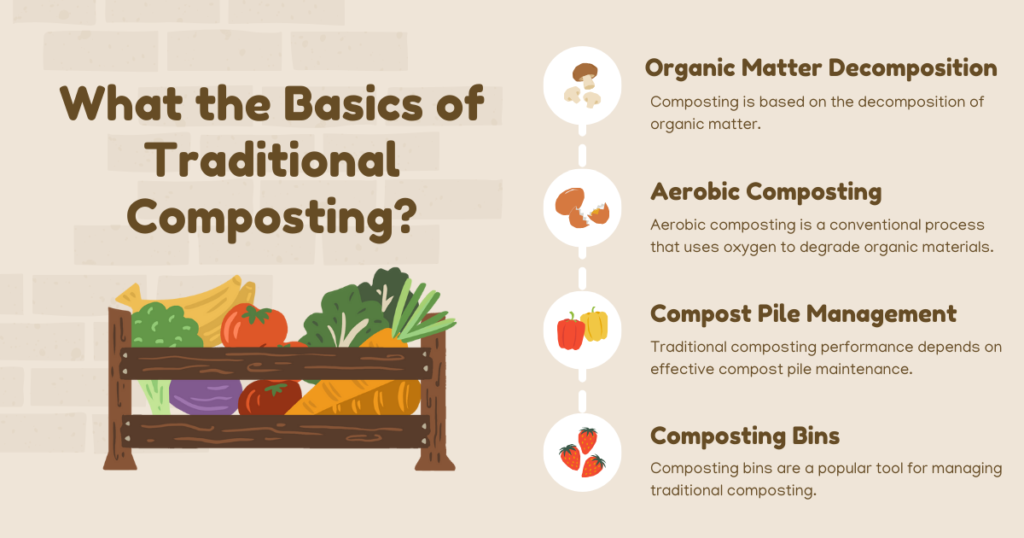
Organic Matter Decomposition
Composting is based on the decomposition of organic matter. It entails breaking down organic waste, such as food scraps, yard trash, and paper goods, into simpler forms using natural methods. This decomposition is mostly driven by microbial species, including bacteria, fungi, and worms, which break down complex organic components to humus.
How Decomposition Works
Decomposition begins with the addition of organic materials to a compost pile or bin. As these materials degrade, they engage in a sequence of biological events. Microbes devour organic matter, breaking it down into simpler molecules like carbon dioxide, water, and nutrient-dense compost. Moisture, temperature, and aeration are all factors that influence this process and can be controlled to increase composting efficiency.
Factors Affecting Decomposition
Several factors affect the rate of decomposition, including:
- Type of Organic Material: Green materials (high in nitrogen) and brown materials (high in carbon) should be balanced for optimal composting.
- Moisture Levels: Compost piles need to be kept moist, but not too wet, to support microbial activity.
- Temperature: Decomposition is faster in warmer conditions. Maintaining an optimal temperature range accelerates the process.
- Aeration: Regular turning of the compost pile ensures sufficient oxygen supply, which is crucial for aerobic decomposition.
Read more: Different type of Traditional Composting Techniques
Aerobic Composting
Aerobic composting is a conventional process that uses oxygen to degrade organic materials. This process generates heat, which speeds up decomposition and kills microorganisms.
How Aerobic Composting Works
Aerobic composting uses oxygen-dependent microorganisms (aerobes) to break down organic waste. As they digest the material, they generate heat, carbon dioxide, and water. The heat created can boost the temperature of the compost pile, accelerating the decomposition of organic materials and creating an ideal environment for more microbial activity.
Benefits of Aerobic Composting
- Faster Decomposition: The presence of oxygen accelerates the breakdown of organic matter compared to anaerobic (oxygen-free) composting.
- Reduced Odor: Aerobic composting produces fewer unpleasant odors, as the decomposition process is cleaner and more efficient.
- Higher Quality Compost: The heat generated during aerobic composting helps kill pathogens and weed seeds, resulting in a healthier final product.
Maintaining Aerobic Conditions
Turning the compost pile on a regular basis is vital for maintaining aerobic conditions and introducing oxygen. This can be accomplished using a pitchfork, a compost turner, or by hand mixing the pile. Proper aeration helps prevent the compost pile from becoming anaerobic, which can result in bad odors and sluggish decomposition.
Compost Pile Management
Traditional composting performance depends on effective compost pile maintenance. Proper management entails managing the physical and environmental variables that influence the composting process.
Building and Maintaining a Compost Pile
Building a compost pile involves layering organic materials to create a balanced mixture of green and brown materials. The pile should be constructed with a combination of:
- Green Materials: High in nitrogen, such as fruit and vegetable scraps, coffee grounds, and grass clippings.
- Brown Materials: High in carbon, such as dry leaves, straw, and cardboard.
Size and Shape
The size and shape of a compost pile might affect its efficiency. A tiny pile may not maintain enough heat, whereas a large pile can be difficult to handle. An ideal compost pile measures 3 to 5 feet in diameter and height. This size enables effective heat retention and aeration.
Monitoring and Turning
Consistently checking the temperature, moisture content, and decomposition rate are all part of maintaining the compost pile. Occasionally rotating the heap promotes even breakdown and helps to oxygenate the compost. In order to keep the temperature within the ideal range for microbial activity, it can be helpful to use a compost thermometer.
Microbial Activity
The foundation of composting is microbial activity. Compost is created by the breakdown and conversion of organic matter by microorganisms. Composting efficiency can be increased by being aware of these bacteria and their functions.
Types of Microbes
Several types of microbes are involved in composting, including:
- Bacteria: The primary decomposers, bacteria break down organic materials into simpler compounds. They are most active during the initial stages of composting.
- Fungi: Fungi decompose tougher materials, such as woody stems and paper. They play a vital role in breaking down complex organic compounds.
- Actinomycetes: These bacteria-like organisms help decompose more resistant materials and contribute to the development of compost texture and quality.
Optimizing Microbial Activity
Maintaining the ideal carbon-to-nitrogen ratio, enough aeration, and regulated moisture levels are critical for microbial activity. It is also possible to supply the nutrients required for the growth of varied microbial communities by including a range of organic materials.
Composting Challenges
Disruption of microbial activity can lead to problems including smells, pests, or sluggish breakdown. Aerating the compost pile properly, controlling the kinds of materials put to it, and changing moisture levels are common options.
Composting Bins
Composting bins are a popular tool for managing traditional composting. They offer a contained environment for composting, making it easier to maintain and manage the composting process.
Types of Composting Bins
There are several types of composting bins available, each with its advantages:
- Open Bins: Simple and cost-effective, open bins are usually made of wood or wire. They provide good airflow but may require additional management to contain materials and manage pests.
- Closed Bins: These bins are enclosed to contain composting materials and minimize odors. They often have a lid and a secure base to prevent pests.
- Tumbling Bins: Tumbling bins are designed to be rotated easily, making it convenient to turn the compost and maintain aeration. They are often enclosed and help speed up the composting process.
Choosing the Right Bin
contain materials securely, and allow for easy turning and monitoring.
Take into account aspects like simplicity of usage, volume of composting material, and space availability while selecting a composting bin. Good aeration, tight material containment, and ease of turning and monitoring are all essential components of a successful compost bin.
Benefits of Traditional Composting Methods
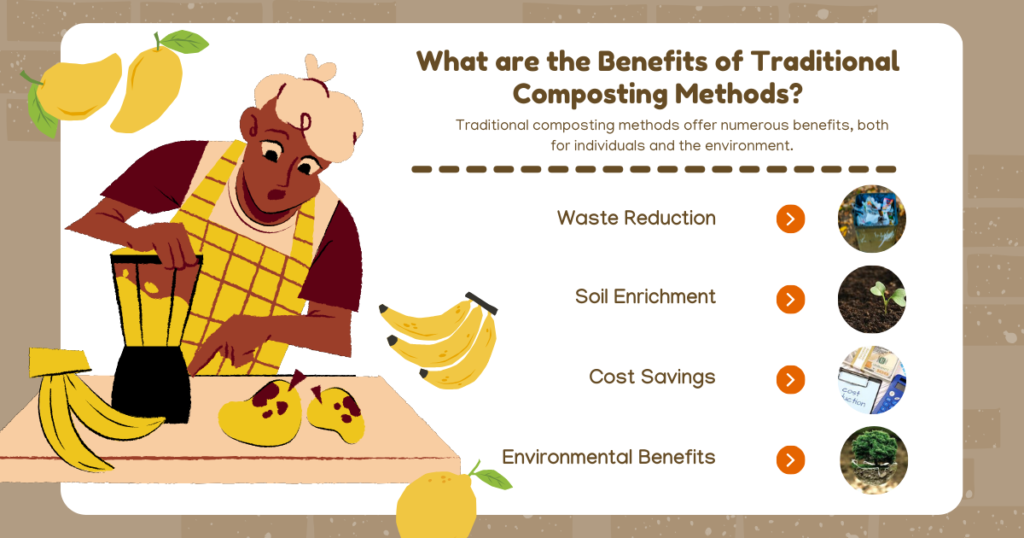
Traditional composting methods offer numerous benefits, both for individuals and the environment.
1. Waste Reduction
Our trash volume that is dumped in landfills is decreased by composting organic waste. By doing this, methane emissions—a strong greenhouse gas released by the decomposition of organic matter in landfills—are reduced, which helps to relieve landfill pressure.
2. Soil Enrichment
promotes beneficial microbial activity in the soil, supporting overall plant health.
Traditional techniques of producing compost yield a rich source of organic matter and nutrients. It strengthens the structure of the soil, increases water retention, and promotes plant growth. Additionally, compost encourages healthy microbial activity in the soil, which supports the general health of plants.
3. Cost Savings
Farmers and gardeners can save money by using less chemical fertilizers and soil additions thanks to composting. Additionally, by lowering the amount of garbage that needs to be managed, employing compost can reduce the cost of waste disposal.
4. Environmental Benefits
Traditional composting techniques lessen the need for artificial fertilizers by reusing organic waste, which promotes environmental sustainability. Composting enhances soil carbon sequestration and lowers greenhouse gas emissions, both of which contribute to the mitigation of climate change.
Impacts of Traditional Composting
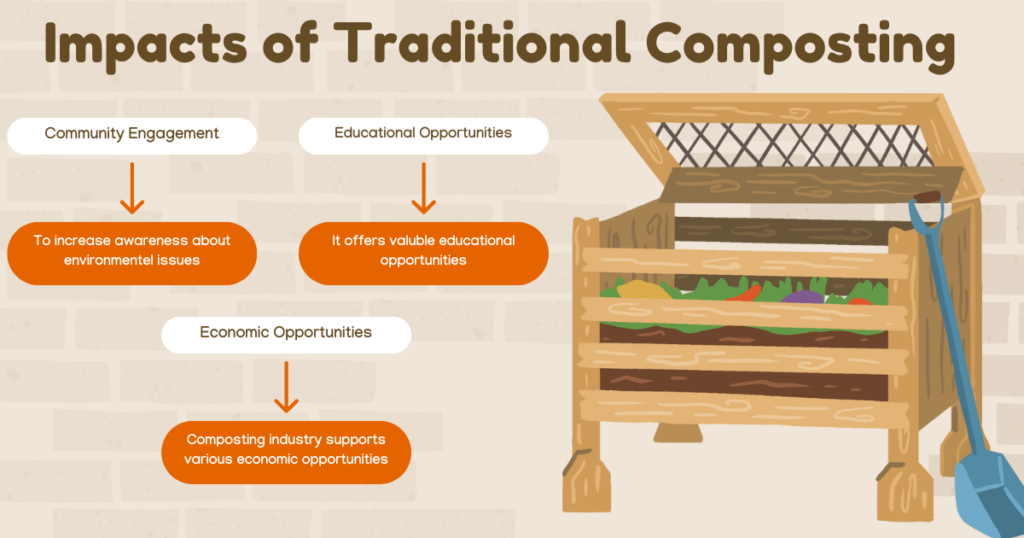
The impacts of traditional composting extend beyond immediate waste management benefits. They influence various aspects of environmental and community health.
1. Community Engagement
Traditional composting fosters community engagement by encouraging individuals to participate in sustainable waste management practices. Community composting programs and workshops can raise awareness about environmental issues and promote collective responsibility for waste reduction.
2. Educational Opportunities
Composting offers valuable educational opportunities, teaching people about the natural processes of decomposition, soil health, and sustainability. Schools and community organizations can use composting programs to engage students and community members in environmental education.
3. Economic Opportunities
The composting industry supports various economic opportunities, including jobs in manufacturing, distribution, and education. Additionally, businesses and farmers can benefit from the sale of compost and related products.
Conclusion
Traditional composting techniques are still essential to sustainable waste management since they are beneficial to people, communities, and the environment in many ways. We may efficiently use aerobic composting, compost pile management, microbial activity, organic matter breakdown, and composting bins to recycle organic waste and improve our soil by comprehending these concepts.
Using traditional composting techniques has several advantages for the environment and the community in addition to lowering waste and promoting soil health. Traditional composting techniques offer a useful and efficient way to promote a healthier planet while we look for long-term solutions for handling organic waste.