Understanding and Implementing Key Principles for a Greener Future
Adopting sustainable practices is more important than ever in a world that is experiencing enormous environmental difficulties. The Refuse, Reduce, Reuse, Re-purpose, and Recycle (or “5 R’s”) provide a strong foundation for reducing waste and encouraging environmental stewardship. This blog delves deeply into each of these ideas, offering real-world applications and emphasizing how they work together to promote a sustainable future.
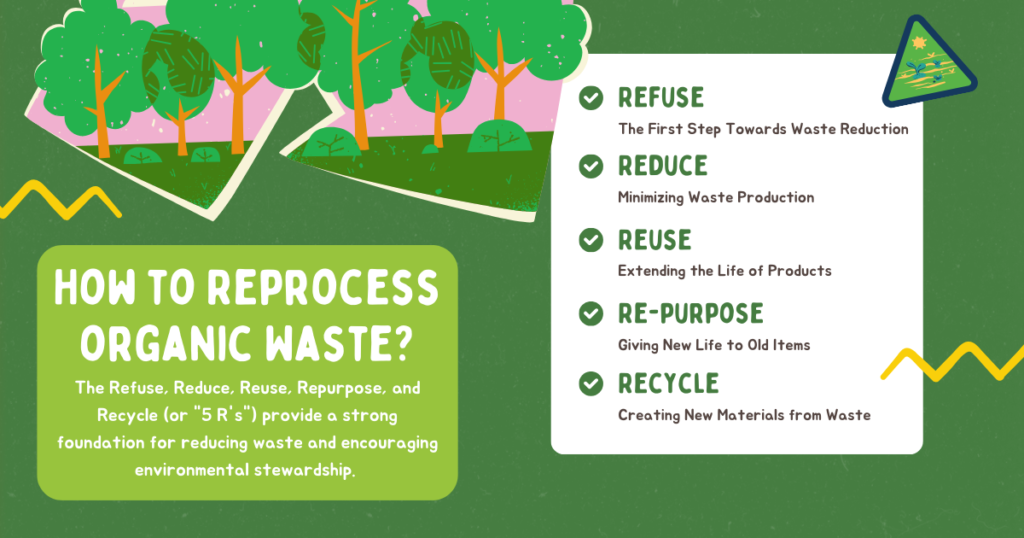
Refuse: The First Step Towards Waste Reduction
Refusing entails making conscious decisions to stay away from goods and resources that increase waste. We can drastically cut down on the amount of garbage we produce by purposefully refusing needless things.
- Avoid Single-Use Plastics: Make the switch to reusable products like grocery bags, water bottles, and containers. One of the main pollutants in landfills and the ocean is single-use plastics.
Example: Carry a stainless-steel water bottle instead of buying bottled water.
- Reject Over-Packaged Products: Select goods with recyclable or little packaging to reduce waste.
Example: Opt for loose fruits and vegetables instead of those wrapped in plastic.
- Say No to Freebies: When presented with promotional things, politely decline them as they often contain low-quality materials and increase waste.
Example: Refuse free plastic pens, keychains, and other trinkets handed out at events.
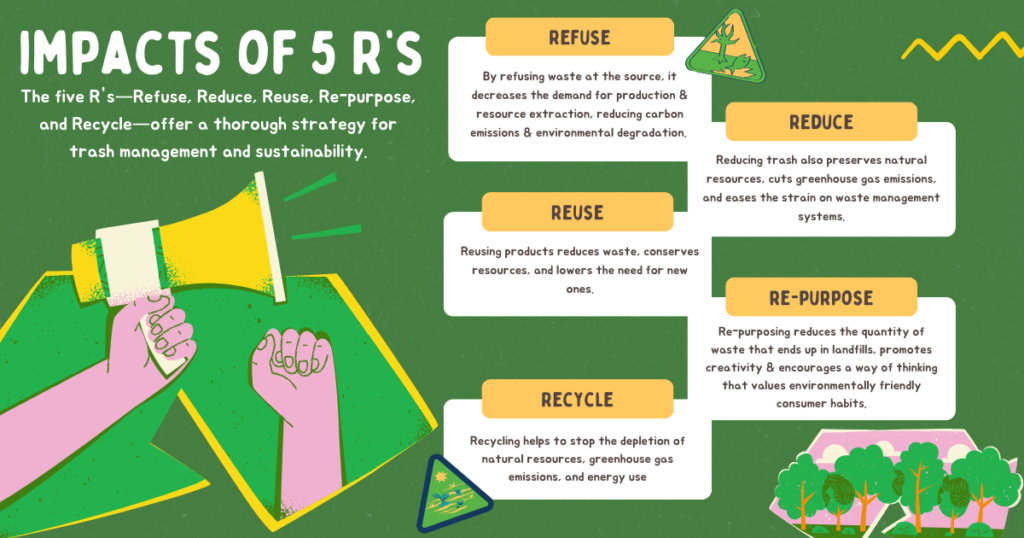
Impact: By refusing waste at the source, we decrease the demand for production and resource extraction, thereby reducing carbon emissions and environmental degradation. This principle encourages mindful consumption and sets the stage for the subsequent R’s.
Reduce: Minimizing Waste Production
Reducing involves conscious efforts to minimize the amount of waste we generate. This can be achieved through thoughtful purchasing decisions, resource conservation, and opting for durable products.
- Buy in Bulk: Purchasing items in bulk reduces packaging waste and is often more economical.
Example: Buy grains, nuts, and other pantry staples in bulk from a store that offers refill stations.
- Prioritize Quality Over Quantity: Invest in high-quality, long-lasting products to reduce the frequency of replacements.
Example: Choose durable clothing and footwear that will last for years rather than fast fashion items that wear out quickly.
- Conserve Resources: Efficient use of resources such as energy and water can significantly reduce waste.
Example: Fix leaking taps, use energy-efficient appliances, and turn off lights when not in use.
Impact: Reducing trash also preserves natural resources, cuts greenhouse gas emissions, and eases the strain on waste management systems. In addition to encouraging a more sustainable way of living, this idea helps safeguard the planet’s limited resources.
Reuse: Extending the Life of Products
Reusing is giving objects that may otherwise be thrown away a new use. We can cut waste and the requirement for additional resources by prolonging the life of things.
- Repair and Maintain: Fix broken items instead of throwing them away. Regular maintenance can extend the lifespan of products.
Example: Mend torn clothing, repair appliances, and maintain vehicles to prolong their usability.
- Share and Donate: Donate items to charity or share them with others to prevent waste.
Example: Give away gently used clothes, books, and household items to local charities or community centers.
- Repurpose Containers: Use jars, bottles, and other containers for storage or creative projects instead of discarding them.
Example: Turn glass jars into storage containers for pantry items or use old wine bottles as candle holders.
Impact: Reusing products reduces waste, conserves resources, and lowers the need for new ones. This principle fosters creativity and resourcefulness, encouraging individuals to see potential in items that might otherwise be discarded.
Re-purpose: Giving New Life to Old Items
Re-purposing, also known as upcycling, is the process of creating new, useful things out of objects or resources that have been abandoned. This innovative method decreases the amount of waste that ends up in landfills while adding value to rubbish.
- DIY Projects: Convert old clothing, furniture, and other materials into new, useful products.
Example: Turn an old T-shirt into a reusable shopping bag or transform a wooden pallet into a garden planter.
- Crafting: Use leftover materials for art and craft projects. This can be a fun and educational activity for both adults and children.
Example: Create decorative items like picture frames or jewelry from scraps and discarded materials.
- Home Improvement: Reuse fixtures and building materials in renovation projects, saving money and reducing waste.
Example: Repurpose old doors into tables or use reclaimed wood for shelving. Also, you can make compost of the organic waste that is generated at home by using many traditional composting techniques or you can more eco-friendly compost machince like solar powered composting machines to create nutrient- rich compost for personal as well as commercial use.
Impact: Re-purposing reduces the quantity of waste that ends up in landfills and promotes creativity. It encourages a way of thinking that values abandoned goods and is in favor of more environmentally friendly consumer habits.
Recycle: Creating New Materials from Waste
Recycling is gathering, preparing, and repurposing waste resources to create new goods. This procedure minimizes environmental pollution while lowering the demand for raw materials.
- Sort Waste: Separate recyclables such as paper, plastic, glass, and metal from non-recyclable waste.
Example: Use separate bins for different types of recyclables to ensure effective waste segregation.
- Follow Local Guidelines: Participate in local recycling programs and adhere to community recycling regulations.
Example: Familiarize yourself with your local recycling guidelines to ensure proper disposal of recyclables.
- Buy Recycled Products: Support the recycling industry by purchasing products made from recycled materials.
Example: Choose recycled paper products, clothing made from recycled fabrics, and eco-friendly building materials.
Impact: Recycling helps to stop the depletion of natural resources, greenhouse gas emissions, and energy use. It encourages a circular economy, in which resources are continually recycled, and it helps to improve waste control.
Segregating and Composting Wet Organic Waste: A Crucial Practice
The process of composting transforms organic waste into nutrient-rich compost that can improve soil health. Composting needs to be done with wet organic waste separated from other waste.
- Collect Organic Waste: Gather food scraps, vegetable trimmings, and other organic waste in a compost bin.
Example: Use a kitchen compost bin to collect daily organic waste and transfer it to an outdoor compost pile.
- Maintain Balance: Ensure the right balance of brown (carbon-rich) and green (nitrogen-rich) materials for effective decomposition.
Example: Mix kitchen scraps (green) with yard waste like leaves and twigs (brown).
- Aerate and Monitor: Turn the compost pile regularly to add oxygen and monitor moisture levels. Proper aeration and moisture are essential for microbial activity.
Example: Use a pitchfork to turn the compost and add water if it becomes too dry.
Impact:
Organic waste composting has a number of advantages for the environment:
– Decreases Landfill Waste: Redirecting organic waste from landfills lowers greenhouse gas emissions, specifically methane.
– Promotes Soil Health: Compost improves soil structure, retains more water, and enriches soil with vital nutrients.
– Decreases Chemical Use: Composting lessens the demand for fertilizers that contain chemicals, which are bad for the environment.
Conclusion: Embracing the 5 R’s for a Sustainable Future
The five R’s—Refuse, Reduce, Reuse, Repurpose, and Recycle—offer a thorough strategy for trash management and sustainability. These guidelines can help us live a healthier, more resource-conscious, and less impactful lifestyle, all while preserving the environment.
These efforts are further enhanced by the segregation and composting of moist organic waste, which lowers the amount of garbage going to landfills, enhances soil health, and produces valuable compost. Using efficient waste management techniques and the 5 R’s as people, communities, and society.
To know more about how to handle organic waste visit us: Guidebest